


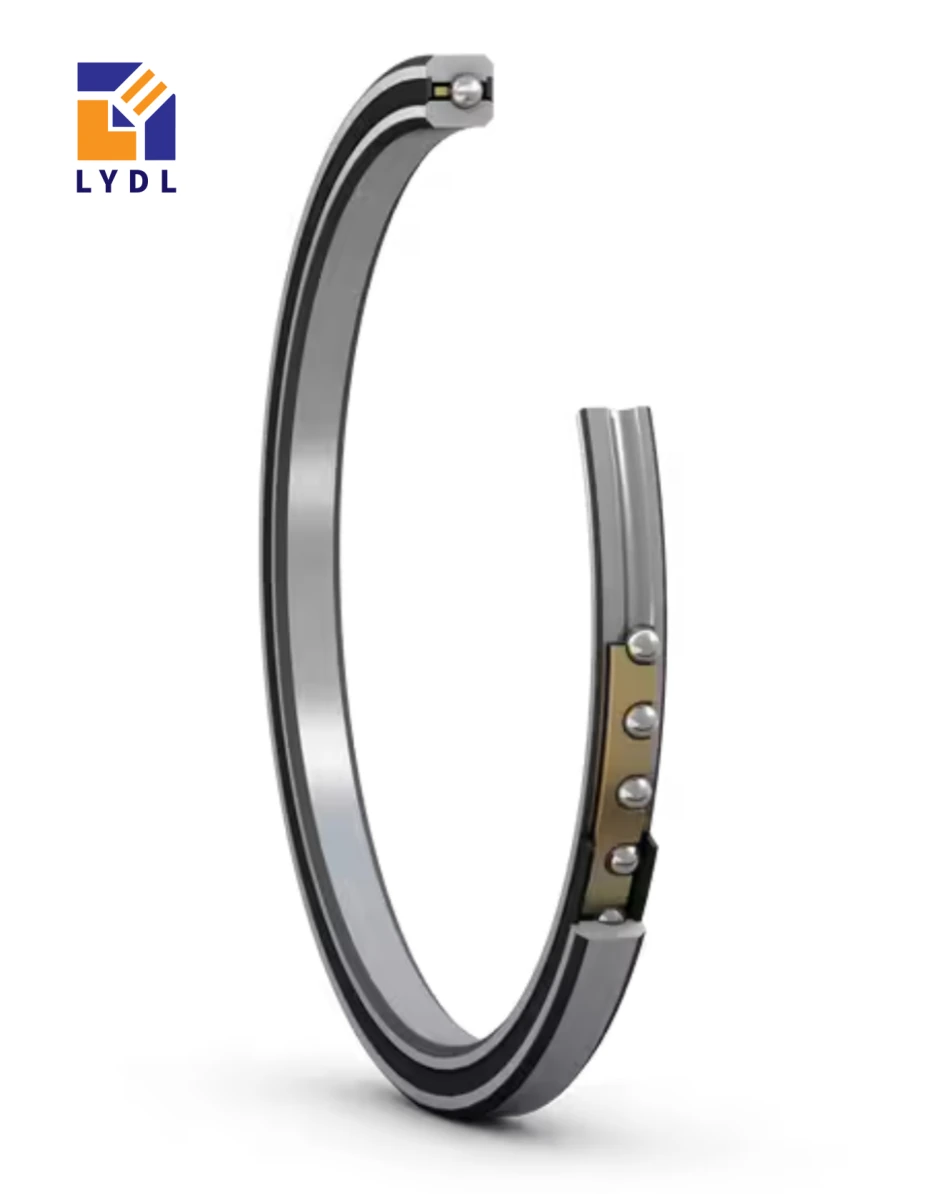

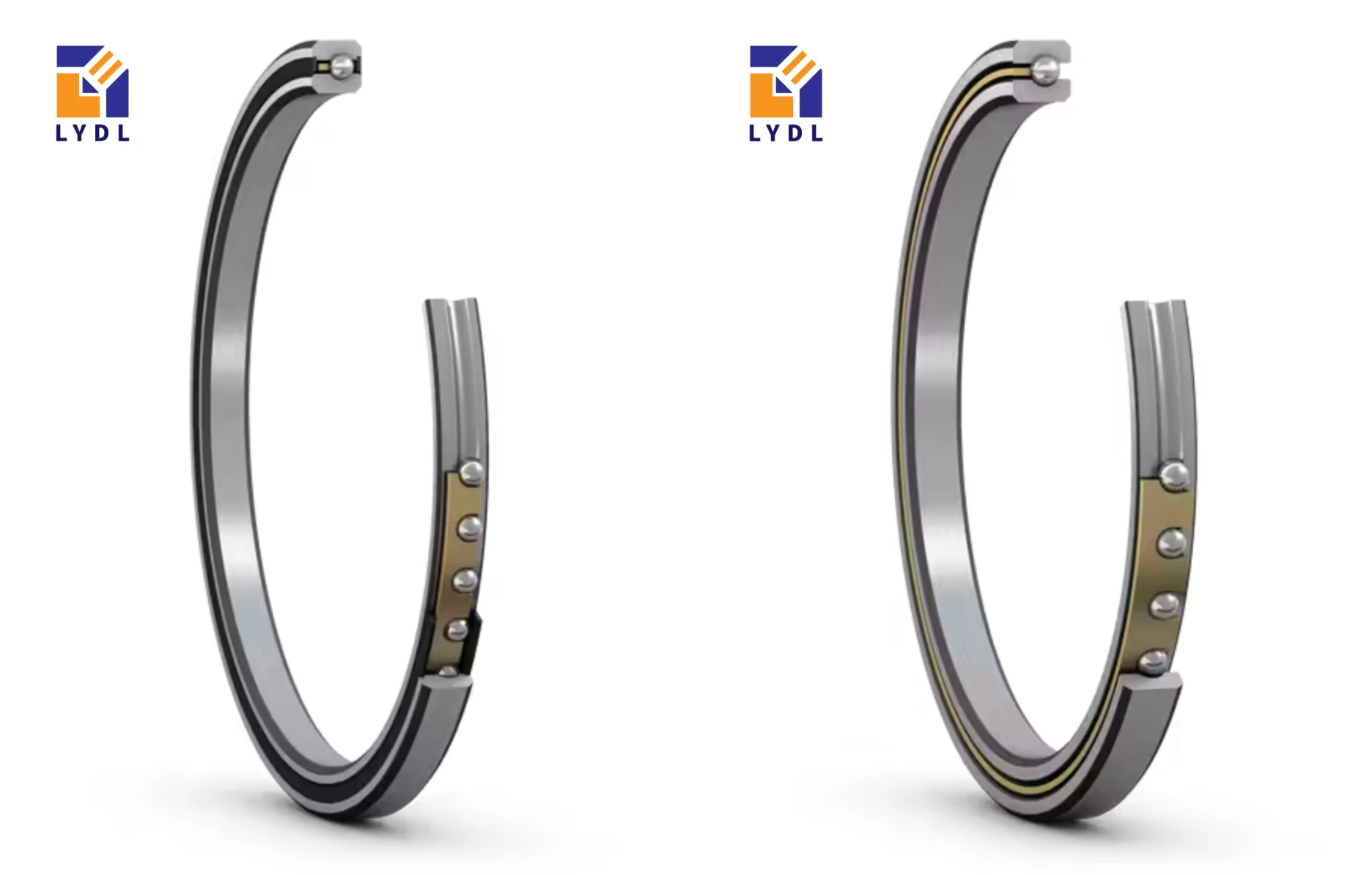
K08008CP0 / J08008CP0 are cross-reference designations for LYDL PC8008 open / PC8008UU double-sealed Type C bearings, with 80 × 96 × 8 mm dimensions. The main selection question addressed here is how the bearing behaves over a complete operating cycle. A short peak-speed event and hours of continuous rotation create different thermal conditions. LYDL supply specifications should therefore be agreed against the machine's duty, lubrication and housing arrangement, not just a catalog rpm value.
| Specification | LYDL PC8008 | LYDL PC8008UU |
|---|---|---|
| Closure | Open | Double sealed |
| Contact geometry | Radial contact, Type C | Radial contact, Type C |
| Bore / outside diameter | 80 / 96 mm | 80 / 96 mm |
| Width / radial section | 8 / 8 mm | 8 / 8 mm |
| Approximate catalog mass | 0.11 kg | 0.11 kg |
| KAYDON reference | K08008CP0 | J08008CP0 |
Both versions are included in the LYDL metric radial-contact series.
Record speed as a function of time, including acceleration, constant-speed periods, braking and pauses. Add the radial load associated with each phase. An assembly that spends most of its time stationary can still encounter demanding starts, while a continuously rotating unit may be limited by sustained heat generation and heat removal.
Identify the sources of heat around the bearing: motor losses, adjacent gearing, external heaters and process temperature can all affect the mounted condition. The housing's ability to transfer heat matters as much as the ambient air temperature. A temperature measured far from the bearing seat may not represent either ring.
For PC8008UU, include seal friction and the proposed grease in the review. For PC8008, describe how lubricant reaches the contacts and how it is retained. Neither closure choice should be treated as universally faster. Approval requires the actual lubricant, internal setting, load and mounting details.
Discuss the PC8008 drawing and operating conditions.
KAYDON reference data — K08008CP0 / J08008CP0. These published figures are not LYDL test results or a certified LYDL load rating.
| Radial rating basis | Reference value |
|---|---|
| Dynamic, KAYDON method | 4,393 N |
| Dynamic, ISO method | 7,399 N |
| Static | 8,424 N |
The catalog identifies ISO 281:1990 as the ISO calculation basis, for comparison only. Keep the two dynamic ratings separate. Dynamic values use one million revolutions of L10 life; static values assume rigid shaft and housing support. The LYDL table labels force capacities in kg, so those entries have not been relabeled as N.
For J08008CP0, the catalog lists 2090 rpm at loads up to 20% of dynamic capacity and 0.09 N·m maximum no-load torque, with standard internal fit and lubricant at room temperature and under 5 lbf thrust. Neither number establishes the permissible duty of the supplied LYDL configuration. No-load torque is frictional resistance, not moment capacity.
An indexing wheel may turn rapidly between positions, then remain still while a process completes. A transport roller can use the same nominal bore yet rotate continuously. Comparing only their maximum rpm hides the different duration of heating and the different lubrication demands at restart.
An 80 mm Type C radial support can be evaluated for either arrangement when the calculated loads and installation are suitable. Choose open construction when the machine provides the required lubrication and protection. Consider double seals when their retention and exclusion functions are useful, then verify the resulting thermal behavior in the assembled mechanism.

Establish a baseline at the agreed starting temperature. Increase speed and load in controlled stages chosen for the application, recording seat temperatures, drive demand and any abnormal vibration. Define stop criteria before testing; do not continue through unexplained rapid heating merely to reach the planned test duration.
At each stage, allow enough time to understand the temperature trend. A momentary acceptable reading does not prove equilibrium. Once the expected production cycle is reached, repeat the real sequence of running and pauses rather than substituting a convenient constant-speed test.
After cooling, check whether starting behavior has changed. Compare the bearing and housing condition if temperatures or friction drift between runs. The objective is a repeatable operating window, supported by the approved configuration, rather than a single impressive peak speed.
Select PC8008 for an open LYDL bearing or PC8008UU for double seals. These are associated with K08008CP0 and J08008CP0, respectively. Record closure and lubrication together because retaining the dimensions while changing either can invalidate an earlier thermal test.
In KAYDON's metric code, C means radial contact, P identifies the standard formed snap-over separator, and 0 denotes class 1 / ABEC 1F. K is the open steel series; J identifies steel bearings with two nitrile seals. These suffixes do not certify LYDL material, accuracy or clearance.
NSK's NBC radial series uses its own dimensional and suffix system. A speed recommendation for an NBC bearing cannot be transferred to PC8008 by matching a similar number. The cited NSK document is a naming comparison, not an operating-limit source for LYDL.
The purchase specification should identify the lubricant, internal setting and any agreed running test. Keep the housing revision and test conditions with the sample report. Where a machine will operate in more than one climate or process mode, define the relevant extremes rather than approving only room-temperature operation. Packaging should preserve the lubricant and protect the bearing from contamination until installation.

The reference value has a stated load condition and is not a guarantee for every housing or lubricant. Continuous operation requires thermal and lubrication review under the actual duty. Submit the expected duration, load, enclosure temperature and heat paths before adopting a speed as a production limit.
An average can hide rapid accelerations, long dwells and repeated starts. Send the time-based motion profile and loads during each phase. The review should consider the peak condition and the cycle's thermal behavior, rather than replacing both with one average number.
Choose repeatable locations close to the relevant seats and document them. Include ambient or enclosure temperature for context. Surface readings are useful for trends but may differ from internal contact temperatures. Agree the measurement method and acceptance criteria with the engineering team before interpreting a numerical limit.
No-load torque characterizes a particular test condition. Mounted resistance can change with load, fits, grease condition and temperature. It is useful reference information, but it does not replace a loaded thermal test or establish the total motor power needed by the mechanism.
Do not assume that more grease will resolve heating. An unsuitable fill or restricted lubricant path can also increase resistance. Investigate the approved fill, lubricant compatibility, seat condition and loading first. Any change should follow a documented procedure and be checked against a new temperature trend.
These neighboring support sizes offer alternative envelopes; compare their duty limits independently when revising the shaft layout:
K06008CP0 / J06008CP0 — 60 × 76 × 8 mm · K12008CP0 / J12008CP0 — 120 × 136 × 8 mm
Share the speed-time curve, radial load history, anticipated seat temperature and available cooling path. Identify PC8008 or PC8008UU, lubricant constraints and expected annual volume. Ask for a drawing and an operating-condition review before setting the final machine speed.
Send your PC8008 selection details to LYDL.