


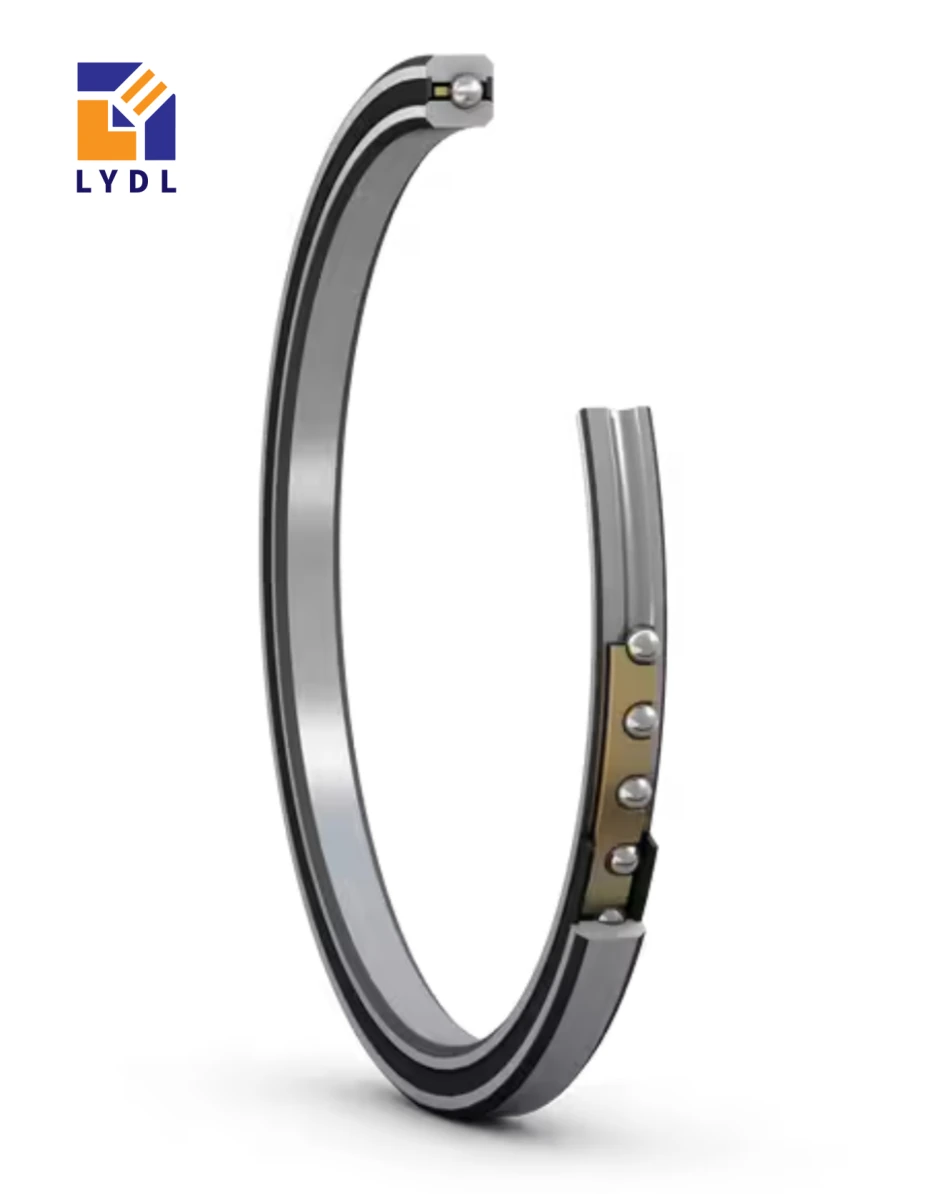

K20013CP0 references LYDL PC20013, an open Type C bearing with 200 mm bore, 226 mm outside diameter and 13 mm width. For this size, a serviceable installation needs a clear answer to three questions: how lubricant reaches the contacts, how contaminants are kept out and how condition can be checked without damaging the assembly. The guidance below supports that review. It does not assign an unverified sealed counterpart or promise a maintenance interval from the model number alone.
| Parameter | LYDL PC20013 |
|---|---|
| Bore diameter, d | 200 mm |
| Outside diameter, D | 226 mm |
| Axial width, B | 13 mm |
| Radial cross section | 13 mm |
| Design | Open radial contact, Type C |
| Approximate catalog mass | 0.61 kg |
| KAYDON comparison model | K20013CP0 |
The verified open bearing is shown in the LYDL metric radial-contact series.
Show the intended lubricant path on the housing section. A grease fitting proves that lubricant can enter a cavity, but not necessarily that it reaches the bearing contacts in the required quantity. Identify the supply route, available space and any path for displaced lubricant where the design requires one.
Select grease or oil with the speed, load, temperature and environment in view. Confirm compatibility with preservation materials and any existing lubricant before changing products. Do not assume that two greases are compatible because their appearance or stated application is similar.
The open construction makes the surrounding enclosure responsible for practical contamination control. Consider dust sources, handling debris and the service procedure itself. A lubrication point that is difficult to clean can introduce particles during maintenance. Plan access so the technician can identify the correct port and follow the approved method without exposing the bearing unnecessarily.
Discuss the PC20013 drawing and operating conditions.
KAYDON reference data — K20013CP0. These published figures are not LYDL test results or a certified LYDL load rating.
| Radial rating basis | Reference value |
|---|---|
| Dynamic, KAYDON method | 13,837 N |
| Dynamic, ISO method | 19,784 N |
| Static | 31,695 N |
The catalog identifies ISO 281:1990 as the ISO calculation basis, for comparison only. Keep the two dynamic ratings separate. Dynamic values use one million revolutions of L10 life; static values assume rigid shaft and housing support. The LYDL table labels force capacities in kg, so those entries have not been relabeled as N.
No model-specific operating speed is quoted from the open reference table. Obtain LYDL limits for the selected lubricant, internal setting and actual duty before approving operation.
PC20013 can be evaluated for a radial support in equipment with an engineered enclosure and scheduled service access. The 13 mm section provides a different installation envelope from PC20008, but it does not determine lubricant quantity or replenishment frequency.
An OEM may need to inspect the assembly during planned shutdowns rather than remove the bearing at every service. Design suitable access to observe leakage, temperature trends or other agreed condition indicators. Establish inspection and intervention criteria from the actual duty and validated experience, not from a generic thin-section bearing service interval.

Keep the bearing protected until the housing and tools are ready. Inspect mating components for debris and burrs before installation. Follow the agreed preparation method so that shipping preservation and operating lubrication are handled consistently; do not wash or re-grease the bearing simply because it is open.
Arrange tools to act on the ring being fitted and avoid force through the rolling contacts. Where a housing cover must be removed for service, consider how that operation affects ring retention, alignment and cleanliness. Reassembly should restore the documented condition rather than depend on the technician's memory.
For equipment held as a spare, define preservation and storage procedures for the complete assembly. An unused bearing can still be affected by contamination, corrosion or unsuitable storage conditions. Record the storage period and inspect the preserved condition before returning the machine to service.
Order PC20013 under the LYDL manufacturer identity and retain K20013CP0 as the cross-reference field. No standard double-sealed counterpart is verified in the current official tables reviewed. A sealed proposal needs its own confirmed designation and drawing, including its effect on lubrication and service access.
In KAYDON's metric code, C means radial contact, P identifies the standard formed snap-over separator, and 0 denotes class 1 / ABEC 1F. K is the open steel series; J identifies steel bearings with two nitrile seals. These suffixes do not certify LYDL material, accuracy or clearance.
NSK uses NBC for radial thin-section designs and describes D / DD as one-side / both-side sealing symbols in its N Series naming guide. These are brand-specific rules, not permission to append a seal suffix to any unlisted model or an exact replacement for PC20013.
Include lubricant identity, supply condition, preservation method and any agreed inspection records in the quotation scope. Keep the approved drawing and batch identification available to maintenance personnel. Distinguish catalog mass from packed shipping weight when planning logistics. Protective packaging should support the bearing and preserve its surfaces until use; it does not substitute for an agreed long-term storage plan.

The operating condition must be confirmed with LYDL. Open describes closure, not a complete lubrication specification. Preservation on a shipped bearing may serve a different purpose from the lubricant required in service. State whether the order requires an agreed operating lubricant or a defined preparation step before assembly.
Size alone is insufficient. Speed, temperature, contamination, lubricant and duty affect the service requirement. Establish an interval through engineering review and relevant operating evidence, then monitor the condition indicators chosen for the machine. This page does not prescribe a universal number of hours.
Not by itself. Review the internal path and whether lubricant reaches the intended region rather than filling an unrelated cavity. Consider restrictions and displaced lubricant where applicable. Validate the housing arrangement and service method before relying on the port location as proof of effective lubrication.
Review the preservation record, storage environment and visible condition before startup. Follow the machine's approved inspection and lubrication procedure, including any required controlled trial. Do not assume that low accumulated running hours mean the bearing is unaffected by a long period of storage or inactivity.
Only after compatibility and application suitability have been reviewed. A substitution can change friction, temperature response or the required cleaning procedure. Keep an approved lubricant list and document any change with its implementation method. Supply the exact previous and proposed products when requesting advice.
These alternatives support comparison of a thinner section or a smaller bore; their lubrication requirements still need independent review:
K20008CP0 — 200 × 216 × 8 mm · K10013CP0 — 100 × 126 × 13 mm
Provide the housing section with lubricant routes, operating loads, speed and service-access constraints. Include the intended lubricant, environmental exposure, shutdown pattern and quantity. Request a confirmed supply condition and documentation package for PC20013 so production and maintenance use the same specification.
Send your PC20013 selection details to LYDL.