


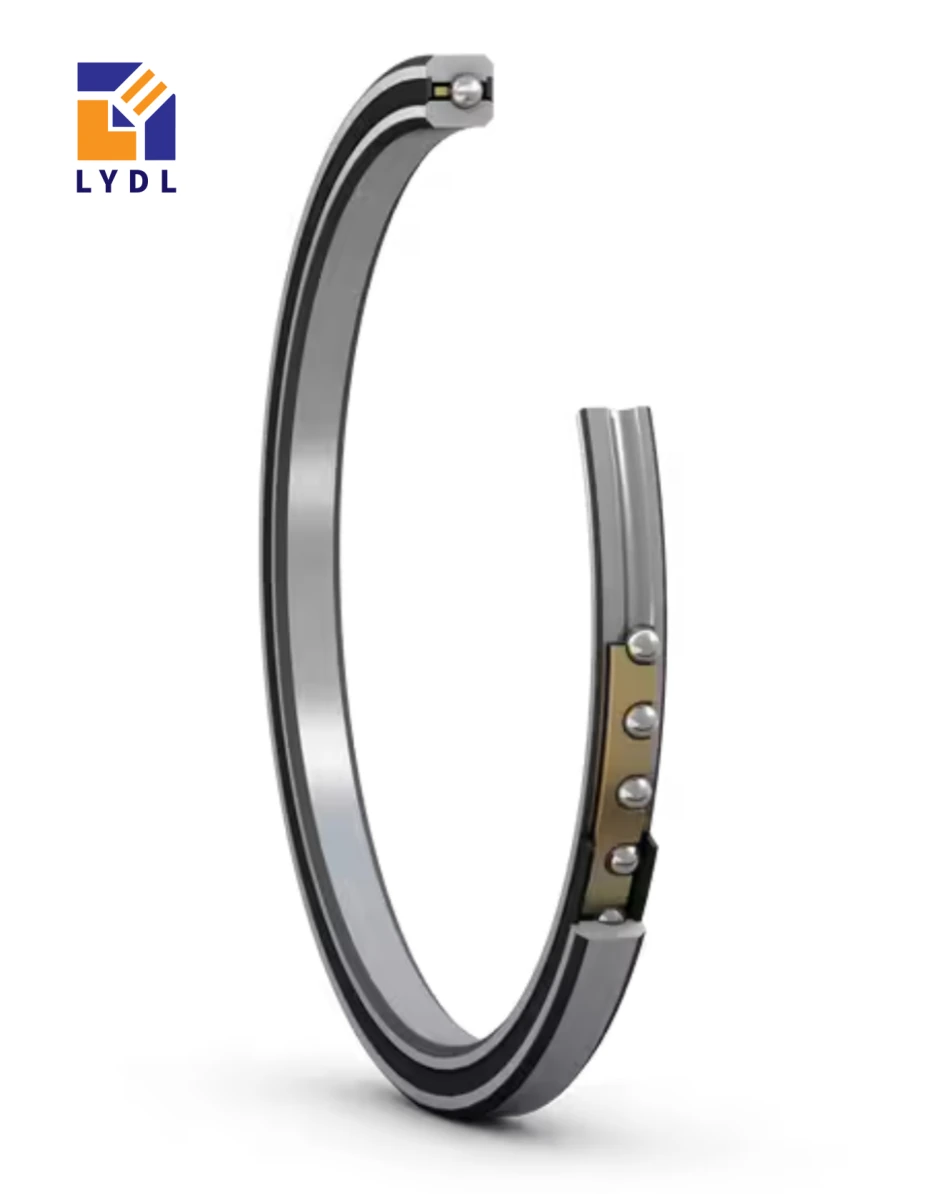

K15013CP0 is the verified reference model for LYDL PC15013, an open 150 × 176 × 13 mm radial contact thin section bearing. Where a machine warms during production, the installation must function both at assembly temperature and in service. Different component materials and temperatures can change fits, internal clearance and axial constraints. This page treats those changes as part of the selection, with reference-brand data clearly separated from the specification to be confirmed for LYDL supply.
| Parameter | LYDL PC15013 |
|---|---|
| Bore diameter, d | 150 mm |
| Outside diameter, D | 176 mm |
| Axial width, B | 13 mm |
| Radial cross section | 13 mm |
| Design | Open radial contact, Type C |
| Approximate catalog mass | 0.46 kg |
| KAYDON comparison model | K15013CP0 |
This open 13 mm-section option is documented in the LYDL metric radial-contact series.
List the materials of the shaft, bearing rings and housing, together with their expected temperatures during startup and steady operation. Components that share an ambient environment do not necessarily reach the same temperature. A nearby drive or process can create a thermal gradient across the support.
Use the material expansion data and temperature differences to assess changes in the mating dimensions. For a uniform component, diameter change can be estimated from the expansion coefficient, original diameter and temperature change, but the complete fit also depends on the other mating component. Do not apply one generic expansion allowance to every part.
Check the effect of those changes on ring seating and bearing internal condition. A fit suitable at room temperature can behave differently after warming, especially when housing and shaft materials differ. Obtain the required internal-clearance information and mounting recommendations for the actual LYDL configuration rather than deriving them from the CP0 reference suffix.
Discuss the PC15013 drawing and operating conditions.
KAYDON reference data — K15013CP0. These published figures are not LYDL test results or a certified LYDL load rating.
| Radial rating basis | Reference value |
|---|---|
| Dynamic, KAYDON method | 11,807 N |
| Dynamic, ISO method | 17,810 N |
| Static | 24,085 N |
The catalog identifies ISO 281:1990 as the ISO calculation basis, for comparison only. Keep the two dynamic ratings separate. Dynamic values use one million revolutions of L10 life; static values assume rigid shaft and housing support. The LYDL table labels force capacities in kg, so those entries have not been relabeled as N.
No model-specific operating speed is quoted from the open reference table. Obtain LYDL limits for the selected lubricant, internal setting and actual duty before approving operation.
A production machine may place the bearing housing near a motor or gearbox while the opposite shaft support stays cooler. The warmer station can experience changes in both radial fit and the shaft's axial position. PC15013 may be evaluated where its 13 mm section and open lubrication arrangement fit the machine design.
The objective is to maintain the required support function through startup, production and cooldown. If an aluminum housing or another material is proposed, include its expansion behavior in the review. No particular housing material or fit is prescribed by the nominal 176 mm outside diameter.

Calculate the movement between the relevant axial datums, not merely the total length change of an isolated shaft. The housing or frame may also expand, and temperature may vary along the assembly. Identify which support locates the shaft and where relative displacement can occur.
Check that covers, spacers and nearby components do not close that displacement path when the machine warms. A movement allowance on a drawing is useful only if the assembled parts can actually move as intended under load. The selected fit must remain compatible with ring loading and support requirements.
During validation, record cold and warm shaft positions along with temperatures at meaningful locations. Repeat the cooldown check to look for changes in the initial condition. Any adjustment to fit or internal clearance should be reviewed as a configuration change and documented before batch approval.
The order designation is LYDL PC15013, with K15013CP0 retained as the catalog reference. Only the open construction is confirmed for this page. If thermal or environmental requirements call for seals, request a separately specified design rather than assuming a matching sealed catalog product.
In KAYDON's metric code, C means radial contact, P identifies the standard formed snap-over separator, and 0 denotes class 1 / ABEC 1F. K is the open steel series; J identifies steel bearings with two nitrile seals. These suffixes do not certify LYDL material, accuracy or clearance.
The NBC prefix in NSK's inch-design range identifies radial contact bearings, but its dimensional and internal-clearance rules are separate. Do not use an NBC clearance table as the unconfirmed LYDL mounting specification simply because both products are radial bearings.
Record the reference temperature for dimensional inspection and distinguish it from the operating temperature range. Request the material, lubricant and internal-setting information needed for thermal analysis. At assembly acceptance, define the warm-up condition and the location of each temperature measurement. Preserve the same conditions for later comparisons so that a change in room temperature does not become a false quality trend.

Only if that temperature adequately represents the mating parts, which should be established rather than assumed. A warm shaft and cooler housing can change the fit differently from two equally heated components. Use component temperatures and appropriate material expansion data for the installation analysis.
There is no universal answer. Relative expansion, ring loading, wall thickness and the bearing's internal condition all affect the decision. A tighter fit can also change clearance or distort a thin support. Review the actual materials and temperature range before specifying an interference adjustment.
Do not treat internal clearance as an undefined axial expansion mechanism. Establish an intentional locating and displacement arrangement for the shaft system. Review the relative movement between the relevant datums and the bearing's allowable internal condition separately.
Possible causes include changing fits, constrained axial growth or lubricant behavior at temperature. Record temperatures and shaft position as the resistance develops, then compare them with the design assumptions. Avoid diagnosing the cause from housing surface temperature alone or changing several settings at once.
Provide materials, the expected temperature map, speed and load cycle, support spacing and axial constraints. State how the machine will be warmed and where displacement will be measured. Ask LYDL to confirm the proposed lubricant and internal setting for the sample, with those details retained for repeat orders.
Consider a thinner section at the same bore or a larger 13 mm-section support when revising the thermal and structural layout:
K15008CP0 / J15008CP0 — 150 × 166 × 8 mm · K20013CP0 — 200 × 226 × 13 mm
Send the shaft and housing materials, cold and operating temperatures, load cycle and axial datum scheme. Include permissible displacement, lubricant restrictions and the required quantity. LYDL can review the proposed PC15013 supply condition and prepare a drawing-based quotation.
Send your PC15013 selection details to LYDL.